Photography Setup Options
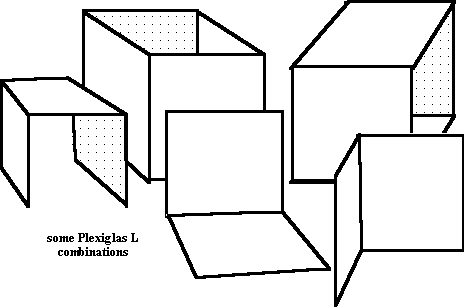
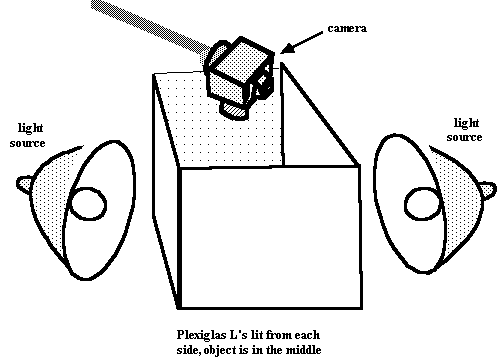
The use of 'Plexiglas L's' is an extremely effective small scale lighting system. You take white, translucent Plexiglas, and you make squares approximately two feet (60 cm) on each side. Then you make two L - shaped constructions by gluing the edges together.
4 Minute Read

Learn the other photography setup options that would suit your needs when taking photographs of jewelry or other objects. Read for more!
Plexiglas L's
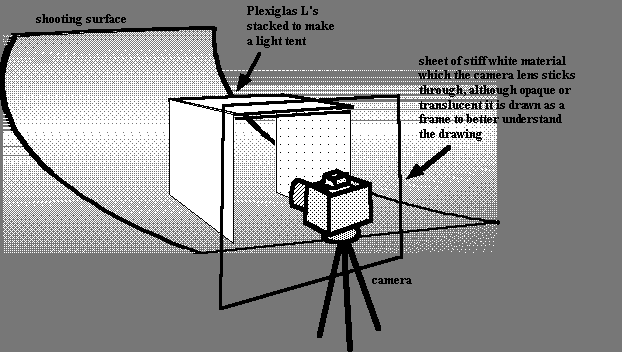
The use of 'Plexiglas L's' is an extremely effective small scale lighting system. You take white, translucent Plexiglas, and you make squares approximately two feet (60 cm) on each side. Then you make two L - shaped constructions by gluing the edges together.
In a pinch duct tape on the outside to hold parts temporarily may be helpful. Having the L shape allows you to stack them in different ways, so that they can be instantly positioned one on another forming a top and two sides to create a perfect light tent. The object goes inside, and a white reflective card that the camera pokes through gives you a great light tent. The lights would be brought fairly close in to the translucent Plexiglas. A four - sided box can easily be made for placing an object inside and then shooting down at it. It would be lit from the sides through the Plexiglas. They can also be positioned so that the light comes up from under the object - this style of shot is used a lot with glass objects.
So these Plexiglas 'Ls' give you a great deal of freedom in how you use them.
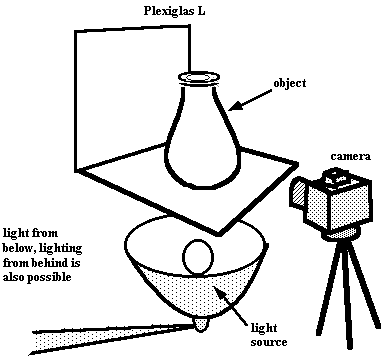
An advantage of using the L as in the above diagram is that shadows cast from any overhead lighting present are eliminated because of the lighting from below.
Curving Reflector Card
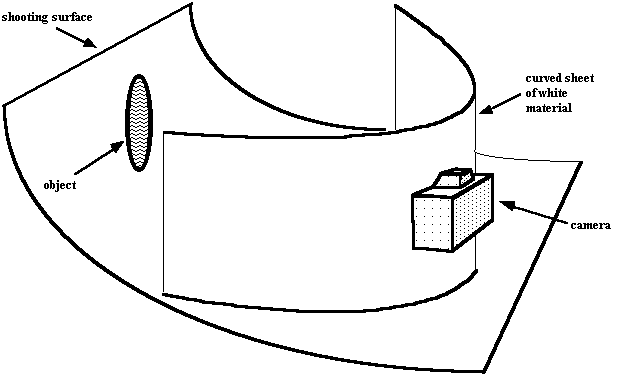
A method that I have not used but that looks quick and easy is to take a large white curving card and stick the camera lens through it to look at the object (Bomback, p 164). If your object was particularly reflective I suspect that you would want a Mylar? 'roof' over the top of the curve to make it into more of a 'tent.' Because the curving white card fixes the camera in place you would have problems eliminating the lens reflection, but there are times I can see this as a good solution to a specific problem.
Milk Jugs
Another inexpensive approach for obtaining a tent is a trick using a translucent gallon (4 liter) plastic milk jug from the supermarket. Take a milk jug and cut a hole in it at the neck to receive the camera. Then cut the bottom off. Arrange the height for the correct focal distance from the lens to where you cut the bottom off, which means perhaps you have several milk jugs cut to different heights for different sizes of object. The lights are placed fairly close to the jug, or you can use daylight film and put your reflective object inside the jug outdoors to photograph it.
Styrofoam Cooler
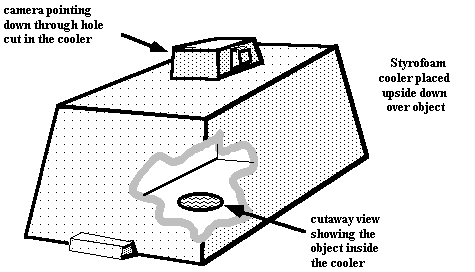
I've heard of people using a Styrofoam cooler from the grocery store as a kind of tent; you can buy them for a couple of dollars, and they work in a similar way to the milk jug, only now you've got a larger object that you stick your camera lens through. Make a round hole in the middle that is a little small for the lens (so the cooler doesn't fall off the lens if you lift it). Styrofoam coolers cut off a lot more light than a milk jug and one has to adjust for this. They're also, like all plastics, susceptible to heat so if you're using photofloods for a light source that's a potential fire hazard. Be careful of melting plastics and fumes!
White Card on Camera - Shooting on the Ground
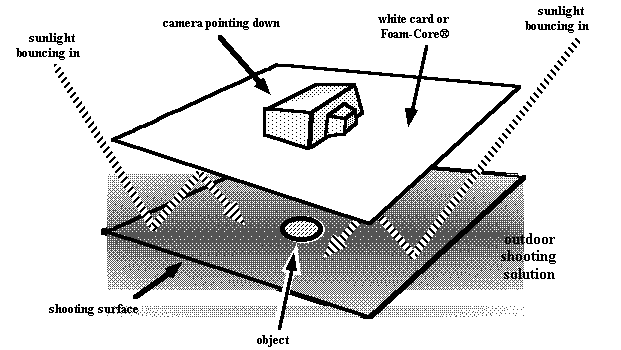
David LaPlantz once described to me a very easy solution for shooting good quality photographs of flatter objects outdoors using daylight film. You take a big white card or Foam - Core? (about 2 - 3 feet square) with the camera lens stuck through a hole in the middle of it and place your shooting surface on the ground outside. You stand leaning over the object which is in the middle of the shooting surface. The light comes in from the sides, bounces back off the ground and the edges of the shooting surface, hits the white underside of the sheet the camera is stuck through, and then bounces back down to the object providing front and side lighting for it with a very smooth and even, nice, white light. I've seen some photographs done like this that you would swear had to have been done on a more complex system.
It is best for flatter objects. You have to have good sunlight, and you have to be bouncing the light off surfaces before it reaches your object. This is a good place for shooting surfaces like Color - Aid? paper - papers that are graduated, so they go from one tone to another. Pantone? is another maker of background papers. I've seen a slide done on this set - up where the object was just sitting on a very beautiful, graduated - tone, colored paper surface, and it looked like it was sitting on a piece of invisible glass and magically floating some distance in front of a drop shadow background.
Related Articles
Proper Studio Light

Communication with Jewelry Photography

Reflective Objects Photography

Small Objects Photography Check Lists
The All-In-One Jewelry Making Solution At Your Fingertips
When you join the Ganoksin community, you get the tools you need to take your work to the next level.