Production Methods for Palladium Chain Making
As proudly proclaimed in its name, Balestra 1882 has manufactured high quality gold and platinum chain in Italy since 1882. Now a global organization, its operations have extended far beyond the city of its birth. Last fall, they started researching palladium alloys for jewelry and have begun manufacturing palladium chain. Currently, they offer over 25 different styles of palladium chain in a variety of weights, and sizes. Their factory is capable of processing precious metals from bullion to finished product. Presented here is an overview of their chain manufacturing processes at their facility in Bassano Del Grappa, Italy.
5 Minute Read

Featuring Balestra 1882, a chain manufacturing company with its headquarters in Vicenza, Italy As proudly proclaimed in its name, Balestra 1882 has manufactured high quality gold and platinum chain in Italy since 1882. Now a global organization, its operations have extended far beyond the city of its birth.
Last fall, they started researching palladium alloys for jewelry and have begun manufacturing palladium chain. Currently, they offer over 25 different styles of palladium chain in a variety of weights, and sizes. Their factory is capable of processing precious metals from bullion to finished product. Presented here is an overview of their chain manufacturing processes at their facility in Bassano Del Grappa, Italy.
Production Methods for Palladium Chain Making | |
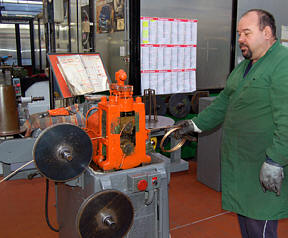 | The process of making chain starts with metals preparation. At Balestra 1882, there is an in-house state-of-the-art laboratory for metal analysis, metals testing and developing alloy formulation. The company has large industrial scale equipment for automated rolling, forming and annealing to process and reduce the metal for chain making. In this image, a Balestra technician rolls out and reduces heavy karat gold wire for one of their chain selections. |
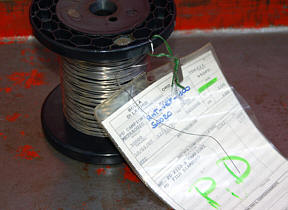 | Through the years, karat gold chain has been produced in massive quantity and Balestra is now gearing up in order to produce palladium chain on the same scale. Here's some 950 palladium round wire for one of the many palladium chain styles they produce. The diameter is slightly less than one millimeter and the alloy has been annealed to dead soft making it very easy to bend. Balestra uses a job tracking form for all orders, which is supported by an in-house computerized inventory system. |
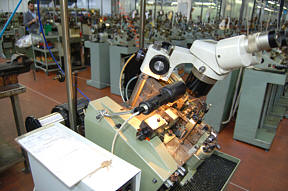 | For machines making chain from very small diameter wire, there are high powered optics for monitoring the weaving and linking process. The resulting palladium chain from this machine will weigh less than 1 gram at a length of 18 inches, which includes the quality tag and jump ring. (There are 31.103 grams to a Troy ounce, so thirty 18-inch chains in this style will weigh less than one ounce.) All links on this palladium chain style are soldered. |
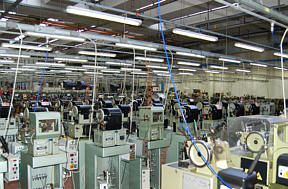 | Balestra 1882 has machines capable of making a wide variety of different chain styles, in a multitude of weights and sizes. Most machines form and join the links from a spool of wire. The soldering of each link from these machines will happen later in the process. After the wire is processed (reduced and annealed), it is ready to be installed in a machine for the production of links. One experienced technician is capable of controlling up to 12 working machines. |
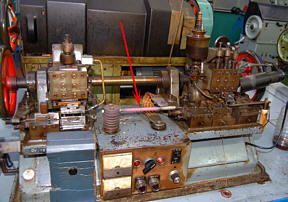 | The wire for this chain style is passed through an annealing tube (red arrow), which further prepares the metal as it is fed into the machine for forming and linking. This tube is a special adaptation invented by technicians at Balestra 1882 and custom built onto the appropriate chain making machines. |
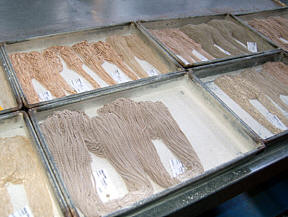 | Here chain made in a variety of karat gold and palladium alloys are prepared for link soldering. Fed from a spool of continuous wire, the chain making machine cut, formed and then joined each link. The individual links emerge with a precisely aligned joint where the ends of the wire come together and are ready for soldering. A specially developed metallurgical powder that contains solder is applied to each bulk of chain in preparation for soldering. The soldering powder is then removed from the links (except from the joint) using a Balestra 1882 proprietary process. |
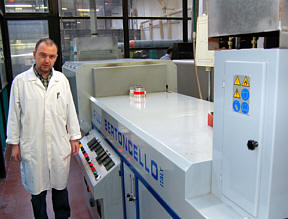 | After the soldering powder is removed from the links, the chain is coated in talcum powder and then run through a conveyor oven with a controlled atmosphere for soldering. The soldering specifications are different for each of the chain styles. A technician in this division controls the parameters and cleans the chain after the soldering is completed. |
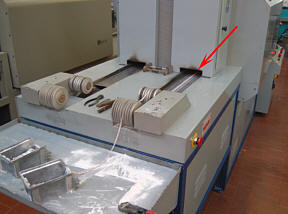 | Here bulk chain is fed into the conveyor oven. |
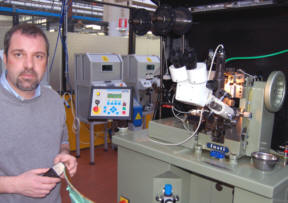 | Some chain styles are manufactured at Balestra 1882 using machines capable of chain forming, linking and laser welding in the same process. These machines also contain high powered optics for close up viewing of the process to ensure quality and consistency. |
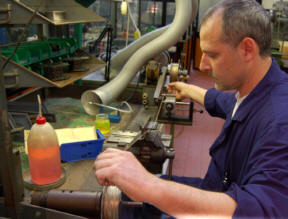 | Many chain styles are diamond cut for bright, decorative finishes. Here the technician prepares this chain style for a diamond cutting procedure. Diamond cutting uses diamond tooling to make a precise bright cut on the metal. This bright cut captures light making the chain more reflective. |
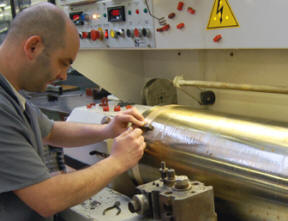 | This technician is preparing chain for diamond cutting by applying it to a large cylinder. The cylinder is covered with water and the chain is literally frozen in place for the diamond cutting process. |
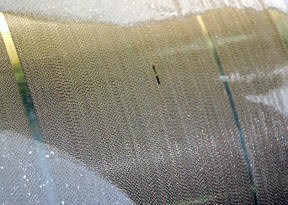 | Here is a close-up view of the cylinder with a chain style attached to it by ice. The ice bond holds the chain on the cylinder in exact position and alignment for the diamond cutting process. |
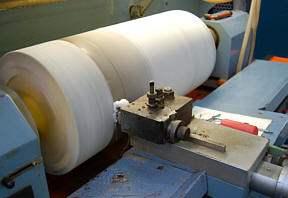 | The diamond cutting tool is controlled by the machine for depth and angle of cut and glides along the cylinder making the bright cuts on different chain styles. |
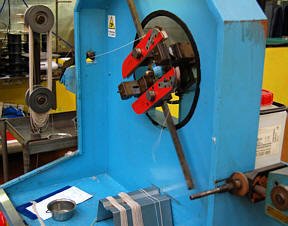 | When the chains are completed, they are automatically cut to length by this unit. The machine is pulling the chain from a spool and cutting it to length. The cut chain drops onto the riser below and waits to be gathered for the next procedure. |
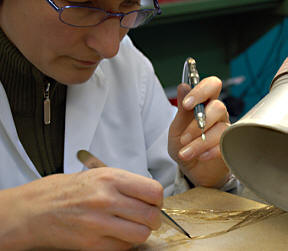 | Technicians use micro torches to hand-solder the jump rings at each end and then attach spring rings or lobster catches. After assembly, many of the chain styles are tumble processed for polishing. |
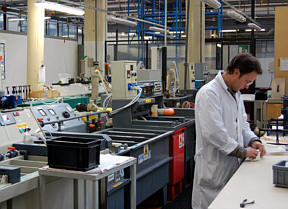 | Most gold chain is plated with either rhodium or gold. Base plating for rhodium includes a layer of palladium plating prior to the layer of rhodium. The plating technician monitors several plating baths which each have different temperatures and requirements for the process. |
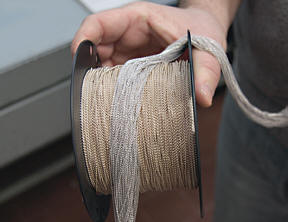 | All white gold chain is rhodium plated. Prior to rhodium plating, the technicians first apply a base plating of palladium. This image shows a hank of rhodium plated white gold chain draped over a spool of the same style white gold chain prior to rhodium plating. |
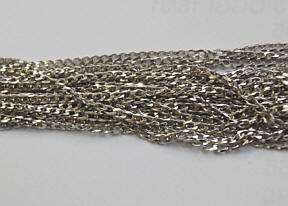 | Palladium chain does not require rhodium plating unless it has inaccessible areas that cannot be machine polished or bright cut. This palladium diamond-cut curb link chain is not rhodium plated. |
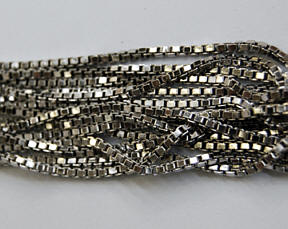 | This palladium box chain is rhodium plated since polishing is nearly impossible in the recessed areas of the box link.Balestra 1882 continues to make palladium chain and is expanding its current selection of chain styles to meet the demands of the global marketplace. |
Related Articles

Revising Milled CAD/CAM Models
Repairing Broken Chains

950 Palladium: 22K Granulation Wedding Band

Chain & Findings


The All-In-One Jewelry Making Solution At Your Fingertips
When you join the Ganoksin community, you get the tools you need to take your work to the next level.