Iridescent Patina Recipe
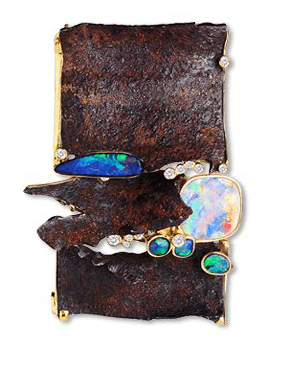
This is the basic recipe for the iridescent patina. This patina is most effective on highly textured pieces, such as torch texture, rollerprinted and reticulation. It has a slight color interference pattern, similar to oil on water. It has a high natural luster, similar to the nacre on pearls, if done correctly with many repeated dips in a weak solution. It is durable, the colors remain stable to a high degree, and.
3 Minute Read

This is the basic recipe for the iridescent patina. This patina is most effective on highly textured pieces, such as torch texture, rollerprinted and reticulation. It has a slight color interference pattern, similar to oil on water. It has a high natural luster, similar to the nacre on pearls, if done correctly with many repeated dips in a weak solution. It is durable, the colors remain stable to a high degree, and very slow (years) to darken or further oxidize.
Further oxidation can be prevented entirely by applying Renaissance Wax when the patina is dry. It is effective on silver, brass and copper, to a lesser degree with gold. This makes it an excellent patina for keum-boo applications, since the 24 kt. gold content remains bright.
Your metal should be thoroughly clean. Wash, or use an ultrasonic, to cleanse off surface dirt and oil, then rinse with clean water. Brass brushing the surface is perfectly acceptable, and provides more surface tooth. The big secret is the addition of two mordants to enhance and stabilize the colors. I usually use salt and ammonia. The recipe I use most frequently is:
- 1 small piece of liver of sulfur
- about 1/4 inch in diameter
- 2 C. hot water
- 1 Tbsp. clear household ammonia
- 1 tsp. salt
Mix the salt and ammonia with the liver-of-sulfur
Your solution should be a very pale straw yellow color. If the solution is too strong, the colors will work too fast. Add additional water if you need it. Iodized salt gives a different effect than kosher salt, each intensifying certain colors the other doesn't.
Now you need to set up your dipping station, lined up in a row, so you can progress from one step to the next, quickly and efficiently. You need a pot of very hot water and bowl of very, very cold water. Your dipping station will be lined up in a row, from left to right: pot of very hot water, hot liver-of-sulfur solution, bowl of very ice-cold water. First dip your metal into the hot plain water to warm up the metal. The warmer the metal is, the more intense the effect and the more quickly the liver-of-sulfur solution works. Then quickly swish it through the liver-of-sulfur solution, then quickly put it in the cold water to stop the action.
Do not leave the piece in the liver-of-sulfur solution for any time waiting for the colors to develop. The color will finish developing in the cold water. Repeat until you get the colors you want. The color range is predictable. First yellow, then green, red, blue, purple, and black. You can have several different colors in one piece by selectively dipping just one part of the piece.
Caution must be used with pieces that have heat sensitive stones, or stones which cannot take thermal shock well, such as opals. However, I've been successful, even with delicate stones, by not getting the metal quite as hot when dipping and working more slowly. I have used this process with pearls, turquoise, fire agates, malachite, rhodonite, corundums and beryls, with no ill effect to the stones. However, I would be reluctant to use the process with say, a heavily included emerald, simply because the thermal shock could cause the emerald to fracture.
After you have achieved the colors you want, wipe the metal dry with a soft cloth. Allow to continue drying for several hours. If you wish at this point, you can "knock-back" the patina on the high points with a little rouge on a felt buff, so you have the contrast of the bright silver against the color. Clean the metal again, and apply a high quality wax, such as Renaissance Wax, or cabinet-grade lacquer. Wax will dull down the colors a bit, and lacquer will brighten the colors a bit. For things that will be subjected to a high degree of wear, such as bracelets or rings, you may want to incorporate guard wires during the fabrication of the piece to protect the patina from abrasion. However, on something like reticulation, where there are natural hills and valleys, the valleys naturally retain the patina, while the high points become bright and shiny with abrasion, providing a very lovely contrast.
Hope you have fun playing!
Related Articles
Using Liver of Sulfur
Patination Sources from the Internet

Tips & Techniques for Popular Finishing Touches

The Foundation of Japanese Patinas

The All-In-One Jewelry Making Solution At Your Fingertips
When you join the Ganoksin community, you get the tools you need to take your work to the next level.