Electroforming for Innovative Design
There are four principal methods of producing jewellery today: Hand making, using traditional craft skills, Investment (Lost wax) Casting, Pressing (stamping) and Electroforming.
 
 More than 50 % of all jewellery is produced as hollow parts; this is mainly realized by using either a pressing technique or electroforming. The advantages of hollow jewellery are wearer comfort on the one hand, such as in the case of ear ornaments or brooches, and price on the other hand, since hollow parts are less expensive than solid parts due to precious metal savings..
13 Minute Read

Since the middle of the 1980s, electroforming has gained in importance in the jewellery industry. Before then, this jewellery production method had been known but it had not been properly used for the following reasons:
- Due to the good order situation in the jewellery industry, new technologies were not realized for reasons of time.
- The new design possibilities of electroforming were not optimally used because, in part, conflicts with the companies' existing model policies arose and the entrepreneurs did not want to make their customers feel uncertain by making considerable design changes.
- Due to the stable gold price, there was no need to push forward any precious metal saving technologies.
- There were few suppliers who could provide plants as well as chemistry for producing electroformed hollow jewellery, thus the flow of information to the jewellery manufacturers was progressing only very slowly.
- Electroforming was mostly seen as an alternative to pressing or stamping only; for this reason, the design possibilities were either not known or not fully utilized. In the years 1980/81, fluctuations in the gold price put the jewellery market into a state of uncertainty. Within a very short time, the wish for jewellery production methods that enabled saving in precious metals arose. Attempts were made to switch to alternative metals such as palladium or titanium alloys or to produce lighter pieces of jewellery, which inevitably also increased the demand for electroformed hollow jewellery. The interest in electroforming was awakened by new suppliers of plants and chemistry and the intensive contact of the specialist firms with designers, schools and jewellery manufacturers. Since the beginning of the 1990s, electroforming has been firmly established in the production of jewellery.
Production Methods
There are four principal methods of producing jewellery today
- Hand making, using traditional craft skills
- Investment (Lost wax) Casting
- Pressing (stamping)
- Electroforming
More than 50 % of all jewellery is produced as hollow parts; this is mainly realized by using either a pressing technique or electroforming. The advantages of hollow jewellery are wearer comfort on the one hand, such as in the case of ear ornaments or brooches, and price on the other hand, since hollow parts are less expensive than solid parts due to precious metal savings.
Production of Hollow Jewellery
Production of Hollow Jewellery by Means of the Pressing Technique
The pressing technique has the largest share in the hollow jewellery market, but due to process restrictions, only simple designs can be manufactured. In order to be able to offer pressed jewellery in the inexpensive field, this kind of jewellery is preferably produced in large numbers and low caratages such as 8ct, 9ct and 14ct. However, the inexpensive jewellery involves relatively high tool costs, since one specific tool must be made for every different design, quite independent of the number of items to be produced.
Production of Hollow Jewellery by Means of Electroforming
Electroforming is the latest technology of jewellery production. In contrast to pressing, intricately shaped jewellery can be produced as hollow parts without incurring high tool costs.
Production of Hollow Jewellery by Means of AURUNA- FORM®
Since the middle of the 1980s, Degussa Galvanotechnik GmbH of Schwäbisch Gmünd has been supplying the AURUNA-FORM® Process for manufacturing electroformed and hallmarkable hollow jewellery. The electroformed hollow carat gold jewellery is manufactured with the help of the computer-controlled AURUNA- FORM® plant, Figure 3. The plant itself consists of a master computer, a switch cabinet and the plating module (plating tank), where coating with the desired alloy takes place.
One to a maximum of four plating modules can be simultaneously operated using one personal computer, with automatic monitoring, adjustment and recording of all operating parameters. User friendliness is increased, among other things, by the multi-language input facility, i.e. all required data can be entered into the computer in the language of the respective country. This, as well as additionally available long-term documentation of the most important process parameters, ensures extremely safe processing.
AURUNA-FORM® Process Steps
During the AURUNA-FORM®Process, first a wax pattern is made electrically conductive and then directly coated with the required carat gold in the respective electrolyte without any pre-treatment being required. After plating, the wax is dissolved out; what remains is a piece of hallmark quality hollow jewellery exhibiting high stability and good polishing and soldering properties. Degussa Galvanotechnik GmbH currently supplies baths for manufacturing hallmarkable hollow gold jewellery in 8, 9, 14 and 18 carats as well as fine gold and fine silver.
For manufacturing hollow jewellery in fine gold and fine silver, the AURUNA-FORM® plant does not require to be computer controlled.
Application Examples of Precious Metal Electroforming
Decorative electroforming today is mainly used for producing hollow jewellery and statues. Natural objects and replicas can be electroformed as well.
The potential of electroforming in design can be seen in the following examples of earrings, pendants, brooches, chains, bangles and clasps.
Electroforming Combined with Other Jewellery Production Methods
To make the best possible use of design possibilities and designers' inventiveness, electroforming is frequently combined with other jewellery production methods. Combinations with pressing and casting are very well suited to this purpose. Combinations with stones, corals and pearls or enamel coatings also open up interesting, completely new aspects of electroformed jewellery.
Innovative Design
After Stefan's review of the electroformed jewellery available in the market at the present time, I would now like to introduce you to six concepts regarding the innovative application of the electroforming technology.
With the turn of the millennium, a serious approach towards design is taking place in all industrial sectors, shaping the most technically and aesthetically advanced industrial and semi-industrial products that we have ever seen in history. Life-styles world wide are rapidly evolving in our high speed communication era, while the awareness of quality and research of novelties is constantly growing in every field, from entertainment to transports, from health to communication. We are all amazed by the variety of new materials used in furniture, the spaceship inspired shapes of cars, the latest high-performance fabrics used for clothes and shoes, as well as the thrilling digital technologies for films and communication devices. Real innovation evolves from the experience of our traditions and putting it in relation with the new awareness of the present time. More than ever, it is fundamental to follow strategic projects for the development of new products. Analysing relevant financial, technical and design aspects, while taking the best advantage of our resources, enables us to give the right answers to the needs of our target consumers and, at the same time, grow the meaning of industries in creation of new cultures.
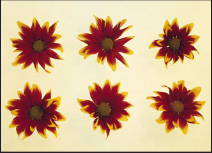
For all consumers, from the emotion- driven societies in saturated markets to the value conscious population in more tradition-bound realities, innovation and design is a decisive element while purchasing jewellery.
Repositioning Electroformed Jewellery
When it comes to fine jewellery, electroforming is the technology that, together with the right marketing strategies and design concepts, gives us the possibility to further boost innovation in the sector. The introduction of electroforming around 10 years ago, as a new and viable manufacturing process for the production of jewellery and accessories in a larger scale, has already proven to be successful from the manufacturing and commercial points of view. Nevertheless, I strongly believe that not everything has been done yet and that this technology is still one of the most effective tools to reach the ideal balance of product innovation and originality with attractive retail prices.
International Markets and Jewellery Style Development
With a brief analysis of the jewellery style evolution in international markets, I would like to show six concepts still to be explored in the world of electroformed jewellery.
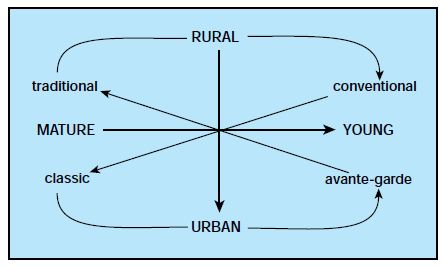
Here we have a chart, which represents how styles have evolved throughout history and in different societies: from rural to urban and from mature to young realities. The most "traditional" taste is found in the rural - mature segment; the expression of this style is the hand-crafted ethnic jewellery.
Young populations living in non- isolated rural areas (or following traditional family customs) are exposed to the influence of Western fashion and follow a "conventional" style. These consumer groups wear mainly low added value items with a non-differentiated style character and often buy copies of renown branded jewellery.
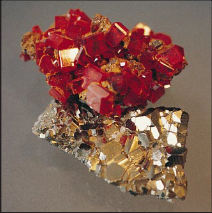
The sophisticated brand-oriented, industrial or semi-industrially made products with very high quality standards in terms of design and finish are often based on the manufacturer's prestige of outstanding performance through the years. These products correspond typically to the "classical" taste of the urban, mature segments.
Art-led jewellery, as the most provocative expression of individual "avant-garde" styles, is normally linked to young populations living in the cities. These pieces of jewellery are mainly hand-crafted, integrate the use of traditional with alternative materials and often go back to rural values of tribal communities.
One can observe that, today, these style evolution phases are often to be found at the same time in the same place, strongly influencing each other. As a matter of fact, influences between different cultures are becoming easier and faster, following the globalisation process of the world economies.
Nowadays, electroformed jewellery corresponds mainly to the conventional tastes of urban consumer segments of saturated markets (mainly in Europe and the USA). There is still very much to be offered in other market segments - branded electroformed jewellery, fashion oriented items, as well as collections for consumers in developing countries, where the population is young, dynamic and continuously looking for novelties in fine jewellery.
As I said before, with the right design, electroforming is a technology with a very interesting potential to offer exciting new ranges of products capable of attracting the attention of everyone. We are talking about a chemical process that differs very much from the mechanical manufacturing techniques (like stamping or casting) which gives to the jewellery pieces specific characteristics with different qualities.
Three-dimensional and Interwoven Shapes
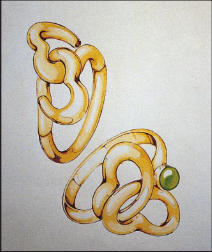
Since the introduction of electroforming, hollow three- dimensional and interlaced shapes can be used on large scale productions of jewellery. This has opened a wide horizon in terms of aesthetics and design, which some committed manufacturers have used mainly for earring, brooch and pendant collections. New designs should continue to be shaped following the principles of ergonomics but certainly the door is still open to allow this style concept to be further developed into an original stylistic language for all typologies of jewellery.
Combination of Manufacturing Techniques
To allow better resistance and endurance as well as resizing for rings, necklaces and bangles, the best way is to use electroforming in combination with other techniques, specially casting. We should always keep in mind while designing these new pieces, that an easy assemblage with few soldering points is desirable to obtain the best quality in the finished products. The combined use of cast and electroformed elements will also allow the production of jewellery pieces set with the whole range of gems, putting no limits to the colour and price ranges of our collections and still taking advantage of the lightness of the electroformed designs.
I would like to add that the concepts of fluid shapes consisting of flowing lines will continue to mark a trend for the years coming in product design, including cars, interiors and textiles.
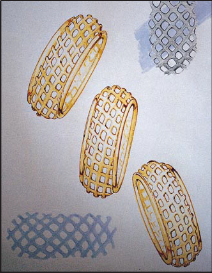
Weight/Size - Perceived Quality/ Price
A new relation between weight and size of the items produced by electroforming has emerged - very low weights with relatively big volumes - changing the perception of fine jewellery drastically in psychological terms. Many consumers are dazed by the beauty, lightness and price convenience of these items, specially in earrings.
Nevertheless, there is still a large number of people who do not perceive lightness as a good quality, especially in those markets where the awareness towards the intrinsic value of the precious materials is very high.
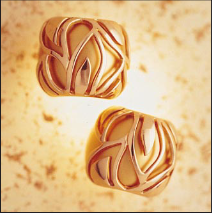
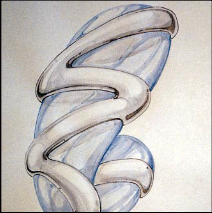
This means that the weight and size parameters often have to be preserved and follow the expectations of our potential clients.
It is worth explaining better to the clients about the finishing and design qualities of the product and give less attention to its weight and price-per- gram. But, if this is too complicated, as it could be in certain markets, we should keep in mind that it is important to come up with designs in which the size corresponds to their perceived weight. This can be achieved by having smaller volumes or thicker walls, as well as integrating cast elements in the jewellery pieces. Cast elements featuring pierced motives applied to the electroformed items efficiently help in giving an overall sense of lightness.
This concept will continue to be very much in vogue in the next future as we can see in fashion, furniture and architecture, where overlapping screens, semitransparent layers and multi-linked, sparkling segments of material are widely used.
Surface Treatments
Not only common surface treatments, such as sandblasting, diamond cut, satin or brush finishes, can be used but also a wide range of surface effects can be gained during the manufacturing process itself, while the pieces are being electroformed. I would recommend everyone to explore the fascinating wide range of surfacing possibilities we have with this technology.
Surfacing is also an important element of innovation and originality for our future collections. As a matter of fact, it is crucial while designing for people with taste for more intricate and elaborated jewellery. This is the case in the larger gold consumer markets, such as the Indian subcontinent and the Arabic Countries, and strongly influencing other areas, where people coming from these cultures live (USA, UK). But surface patterns with more dramatic effects are becoming increasingly important also in Europe and the USA, where the return to the handcrafted luxury is steadily having a come-back with expressions of barroque and elaborated styles.
Combination of Other Materials
Targeting the avant-garde, young groups living in the city, electroforming has a very interesting potential used in combination with alternative materials such as celluloid, plexiglas, fabric, recycled materials. The low operating temperature of the galvanic Aurunaform process allows us to introduce a wide range of materials into the bath itself. I would like to invite everyone using this technology to research into this concept, to be able to come up with the most original and innovative pieces of adornment never seen before.
The Concept of "Natural Growth"
Another area of research is the concept of "natural growth" to be related to the fast evolving stream of bio-technologies which link the natural processes of life with new technologies using advanced materials in "smart" objects. During the galvanic process, the precious material deposits itself on the "core" (wax model) following certain rules given by chemistry. On screens and pierced patterns, an uneven growth must be expected. I strongly believe this is an exceptional feature to be developed into jewellery editions consisting of items which will always come up slightly different. This "natural growth" will allow us to have, for the first time in commercial jewellery, industrially made pieces with specific individual characteristics of uniqueness. Each item will have a different character and at the same time, preserve the finishing quality at the highest standards, as we can observe in the crystal formations and handcrafts.
I see this concept having a great potential, mainly in the highly developed consumer societies, where seeking personalised, exclusive editions of objects is no longer a luxury reserved only to the "rich and famous".
Differentiation
If the products manufactured by electroforming preserve a very clear differentiation, taking advantage of this technology's specific characteristics, I am sure it's potential can be further explored to develop the innovative designs that will reflect our times.
Summary
Electroforming today is a well- established technology in the jewellery industry, which is used for almost all caratages. The particular advantage of electroforming is the fact that large-volume jewellery can be produced at a wearer-friendly weight and a design freedom not possible by other techniques. The possible combination with other jewellery technologies offers designers even more freedom to express their imaginativeness in a piece of jewellery. Moreover, electroforming of genuine jewellery lies in the middle price bracket, thus closing the gap between pressing and casting techniques and making available design that is 'out of the ordinary' available to everybody.
Related Articles

Resists and Electroplating to Create Patterns

Vibratory Finishing Method

Modified CAD Design

The Work of June Schwarcz

The All-In-One Jewelry Making Solution At Your Fingertips
When you join the Ganoksin community, you get the tools you need to take your work to the next level.