Patination by Copper and Copper Alloy Fuming
Patination is a technique which has become popular for some kinds of fashion jewellery in recent years. Usually a patina requires the application of a toxic chemical mixture or the conversion of the metal surface to a salt of it's metal. For most patinations then good ventilation and a knowledge of chemistry is necessary. There are however a number of old patination techniques which are based on a simple.
2 Minute Read

Patination is a technique which has become popular for some kinds of fashion jewelry in recent years. Usually a patina requires the application of a toxic chemical mixture or the conversion of the metal surface to a salt of it's metal. For most patination then good ventilation and a knowledge of chemistry is necessary. There are however a number of old patination techniques which are based on a simple conversion of the metal surface to a colored salt or decomposition product of the metal.
In ancient times metal objects might have been buried in manure or different earths, or even placed in contact with urine soaked porous materials such as sawdust to convert the surface to a colored patina. Going into the kitchen one can find a number of chemicals which can be used to convert copper surfaces or copper alloy metals to patinas.
Salt for example may be sprinkled on a copper surface and then exposed to a humid atmosphere such as above a dryer or in a plastic bag with water in it to cause a major surface change as the copper is converted to copper chlorides. This results in a mottled azure green surface on a pinkish base. The process can take several days or longer. Afterwards the surface is briskly brushed off with a fiber bristled brush and sealed with a wax or plastic such as clear auto enamel.
Copper and Copper Alloy Fuming
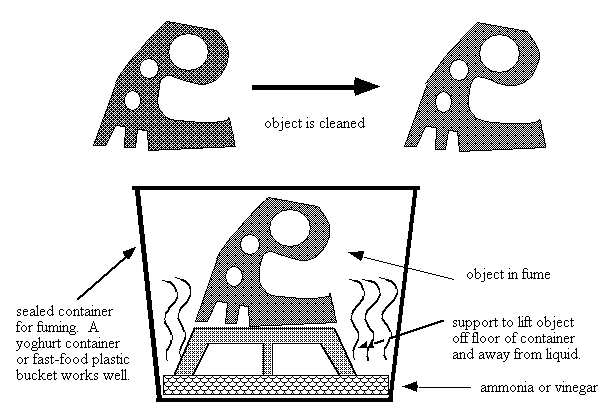
Another easy conversion uses household ammonia fumes to convert the copper or copper alloy (brass for example) to copper hydroxides which are bluish green. One cleans the copper surface to strip it of all greases and oxides. Pumice powder or heating and pickling followed by a brass brushing with soapy water and a scrub with dish washing liquid and household ammonia will be an excellent cleaning procedure. The object is then placed into a sealed container with some household ammonia in a pan on the bottom of the container. This is left to fume for some time, up to several days.
Brass and bronze however become damaged by the ammonia and so should not be fumed longer than several hours. A light dampness to the surface will speed the reaction. Faster, yet, and strongly blue is to use a dilute salt solution which is painted or sprayed on the metal. Fuming times will be quick, one to four hours being usual. The object when ready is removed, rinsed and fixed with a wax or sprayed acrylic coating.
This is a relatively fragile finish and needs a protective coating. If one was patient and scrubbed off the loose patina in between repeatedly fuming it a very adhesive surface could develop. The surface can be easily modified by using resists such as thinned rubber cement to protect it or tying plants onto the surface with thread in an 'Easter egg' dying technique. One can use salt in a damp place and follow with fuming or the other way around for variation. Vinegar may be used instead of or along with ammonia.
Related Articles

Liver of Sulfur 101
Patinating Brass Alloys Using Contact Plating
Japanese Special Patinas
Patination Safety Considerations

The All-In-One Jewelry Making Solution At Your Fingertips
When you join the Ganoksin community, you get the tools you need to take your work to the next level.