Platinum Bench Tricks
This project is dedicated to bench tricks that make working with platinum-or working at the bench in general-easier. This is the first installment of a periodic Platinum Bench series.
2 Minute Read

This project is dedicated to bench tricks that make working with platinum-or working at the bench in general-easier. This is the first installment of a periodic Platinum Bench series.
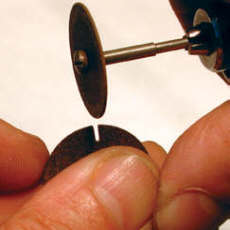 | 1a.Take a separating disc that is in a mandrel and insert it into a flex-shaft. Using a fairly high speed, score a second separating disc in four places. |
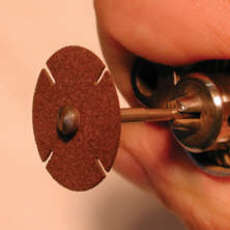 | 1b.Mount the modified disk on a mandrel and use it as you would use a lapping wheel. |
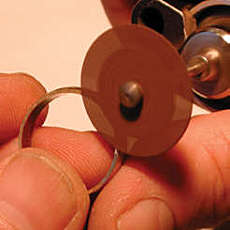 | 1c.The advantage of this modification is that you can see right through the rotating disc, which makes it much easier to work. |
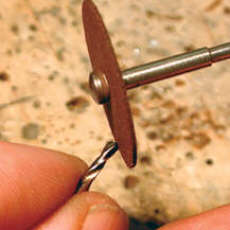 | 2.Don't discard your broken twist drills; it's quite simple to re-sharpen them. Just place a separating disc at the proper angle to grind a new tip. Take care not to overheat the tip of the drill. |
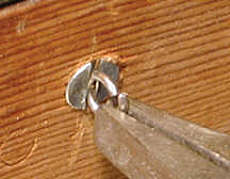 | 3.Installing a simple wood screw on the side of your bench will make it possible to open and close jump rings with ease. |
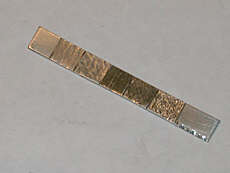 | 4.It is difficult to explain surface textures to a customer who is not familiar with the terminology of the trade. By preparing a texture strip like this one, you'll be able to show the surfaces to clients, preventing misunderstandings. |
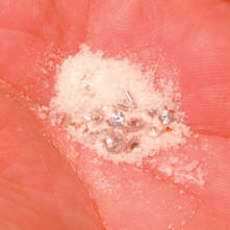 | 5a.When remounting diamonds from an old ring, it is usually somewhat difficult to clean them. For a quick and easy solution, place a small amount of table salt into your hand and add the diamonds. |
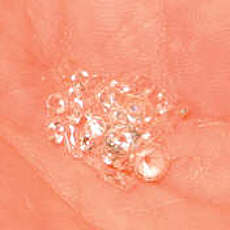 | 5b.Rub the salt and diamonds together. The abrasiveness of the salt will clean the stones without scratching them. Once they are clean, just rinse the salt away using warm water. |
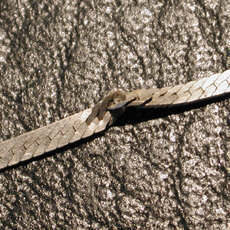 | 6a.To repair a kinked herringbone chain, start by using pliers to gently push the bent links down. |
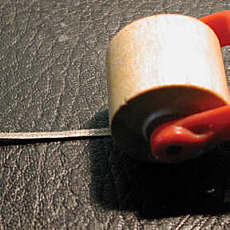 | 6b.Use a regular wallpaper roller to flatten the links. Be sure to roll on a sturdy surface. |
 | 6c.Once the chain is flat again, polish it at the bench with a small, rotating brush. Do not use a large polishing machine, as chains can get caught in the buffs. |
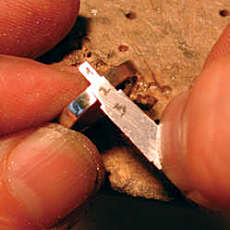 | 7.This small, handy gauge makes it easy to know how much metal needs to be removed to size down a ring one, two, or three sizes. To make the gauge, cut a piece of platinum sheet into three tiers, one for each size. |
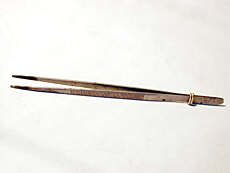 | 8.By wrapping a copper or brass wire around the end of tweezers, you can use them as locking tweezers. Just slide the copper or brass wrap forward to close them. |
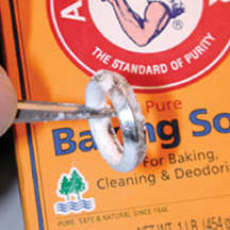 | 9.When polishing a ring with diamonds, it can be difficult to remove the rouge after polishing. Try dipping the ring in water and then in baking soda before you polish. The rouge dust will stick to the baking soda rather than the metal. Since baking soda is water soluble, the rouge will wash away easily when the ring is rinsed. |

In association with

The award-winning Journal is published monthly by MJSA, the trade association for professional jewelry makers, designers, and related suppliers. It offers design ideas, fabrication and production techniques, bench tips, business and marketing insights, and trend and technology updates—the information crucial for business success. “More than other publications, MJSA Journal is oriented toward people like me: those trying to earn a living by designing and making jewelry,” says Jim Binnion of James Binnion Metal Arts.
Click here to read our latest articles
Click here to get a FREE four-month trial subscription.
Related Articles
How to Resize Platinum Rings
Working with Platinum & Platinum Designing

Fearless Platinum Repairs
Platinum Consideration Factors


The All-In-One Jewelry Making Solution At Your Fingertips
When you join the Ganoksin community, you get the tools you need to take your work to the next level.