The Gem and Jewelry World's foremost Resource
on The Internet. Open to the public, Free of Charge! We are here to build a strong pool of
information for the benefit of Web's jewelers and craftsmen - and those
interested in jewelry and gemstones.
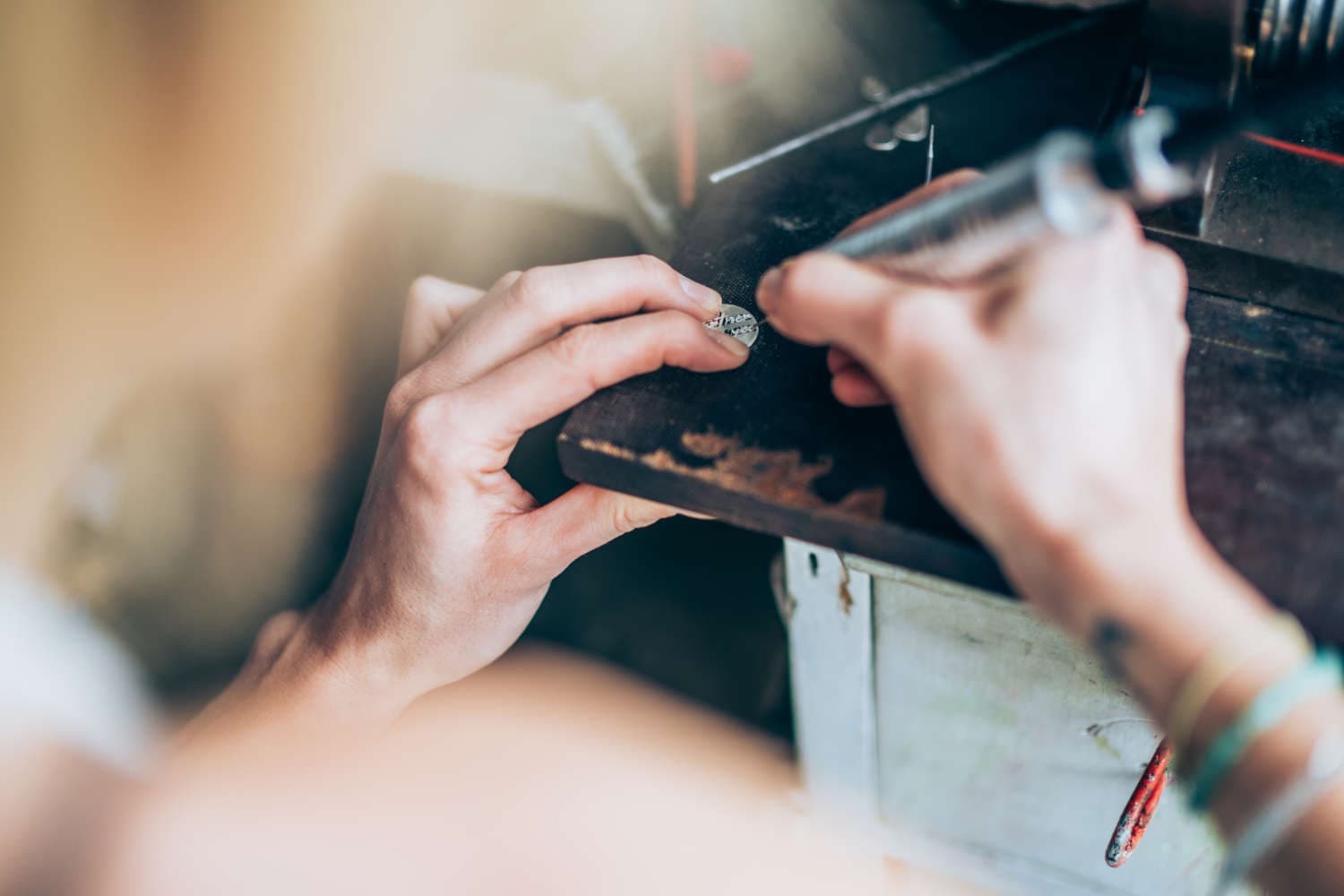
As important as the gravers are, it is hard to understate the importance of the devices used to secure work while engraving. Or to say it another way, even a properly sharpened graver in experienced hands will be difficult to use if the workpiece is sliding across the bench. Knowing this it is not surprising to find that several tools have been developed to hold onto the work for cutting.... (2001) Complete Story
Many industries have need of specialized engravers, for instance those who make dies, who cut stones and glass, and others who carve reliefs. Though a goldsmith might call on a specialist for certain jobs, it is useful to have a general understanding of the technique and sufficient skills to use gravers for simple everyday tasks at the bench.... (2001) Complete Story
In the twentieth century there can be little doubt that electroplating is the best way to develop a gold coating on a metal object. It provides successful results in many colors and can be adapted to one-of-a-kind or mass production. Knowing this, it might seem peculiar to devote the following section to the ancient art of fire gilding. It is more time consuming than modern methods, it requires more material, there is a greater risk of failure, and it is a health risk unless performed under ventilation. Why then should it be included?.... (2001) Complete Story
There are many techniques in which contrasting metals are placed side by side. Those that can properly be called inlay require a mechanical attachment to secure a soft material into a harder one.... (2001) Complete Story
Rolling can be thought of as a local, or isolated, deformation process during which thickness is decreased, length increased, and width remains unchanged. Drawing is different from rolling in that the pressure of drawing it not transmitted through the turning action of the mill, but instead depends on force directed locally at the area of compression. This means the amount of possible drawing force is limited by the tensile strength of the material, a fact that is particularly evident when drawing thin wires..... (2001) Complete Story