The Beauty that is Iolite
You may never have heard of iolite. It isn't a household word, but it is an attractive indigo colored gemstone. It has been called a "water sapphire". Iolite is highly trichroic; in one direction it is totally colorless, this aspect was the origin of the water description. The "blue denim" gemstone is another deserving description. Iolite has a color with its own personality and deserves to be considered on its own merits rather than as a substitute for sapphires or tanzanites. Iolite is often used in jewelry with other colored gemstones such as amethyst, rhodolite, and pink tourmaline.
1 Minute Read
You may never have heard of the iolite gem. It isn't a household word, but it is an attractive indigo colored gemstone. It has been called a "water sapphire". Iolite is highly trichroic; in one direction it is totally colorless, this aspect was the origin of the water description.
The "blue denim" gemstone is another deserving description. Iolite has a color with its own personality and deserves to be considered on its own merits rather than as a substitute for sapphires or tanzanites. Iolite is often used in jewelry with other colored gemstones such as amethyst, rhodolite, and pink tourmaline.
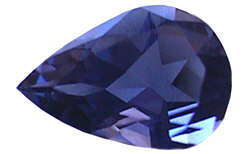
| Iolite, 4.76 carats (Photo by David Dikinis) |
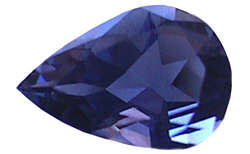
The color of iolite ranges from a light blue-violet to a very dark blue. A medium dark blue is considered the "best" shade. Small iolites are plentiful and will fall into the low price per carat range. Larger stones (three carats or more) can fall into the moderate range if the color is good. Some stones are included; good clarity is important; avoid sleepy stones.
Iolite Gem Properties
| Colors: | Blue to violetish blue |
| R.I.: | l.54 - l.55 |
| Durability: | Slightly fragile |
| S.G.: | 2.57 - 2.66 |
| Treatment: | None known |
| Hardness: | 7 - 7 1/2 |
| Availability: | Adequate supply |
| Localities: | India, Zimbabwe |
| Price: | Low to moderate |
| Common shapes: | All possible in sizes up to l0 carats |
Iolite should be set in a mounting that provides some protection since it has a cleavage in one direction and is slightly brittle.
Iolite derives its name from Greek, "ios" meaning violet and "lithos". The mineral cordierite was named after a French geologist, Mr. Cordier, who first studied it.
Photographs: Bart Curren and ICA Gembureau ; Alex Edwards, Pearl Sales Institute ; David Dikinis
You assume all responsibility and risk for the use of the safety resources available on or through this web page. The International Gem Society LLC does not assume any liability for the materials, information and opinions provided on, or available through, this web page. No advice or information provided by this website shall create any warranty. Reliance on such advice, information or the content of this web page is solely at your own risk, including without limitation any safety guidelines, resources or precautions, or any other information related to safety that may be available on or through this web page. The International Gem Society LLC disclaims any liability for injury, death or damages resulting from the use thereof.
Related Articles

Blue Spinel Turning Heads
2014 Hottest Colored Stone Hues
Gem Dealer’s Secret – Table of Contents
Lapis Lazuli Gemstone Properties

The All-In-One Jewelry Making Solution At Your Fingertips
When you join the Ganoksin community, you get the tools you need to take your work to the next level.

Trusted Jewelry Making Information & Techniques
Sign up to receive the latest articles, techniques, and inspirations with our free newsletter.